Cart
Cart
 Account
 Your Orders
 Sign Out
 Sign In


The CRISPR field is moving fast! Don’t worry, we’ve got you covered. Check in every week for a quick summary of the biggest news and developments in genome engineering research so you can stay up to date with what’s happening in the world of CRISPR.
Our “This Week in CRISPR” series covers the latest news surrounding genome engineering technology and CRISPR applications. First, we focus on a new study published by researchers at the University of Chicago. The team there have created so-called “CRISPR skin” that secretes an enzyme known to break down cocaine to suppress one of the main reward pathways activated during drug addiction. We’ll also tell you how CRISPR has been used to confirm that non-coding regions of the genome can drive cancer development and cover new findings that could help scientists find the genes that help cells resist infection from Zika and yellow fever viruses. Lastly, we’ll bring you news of the strategic collaboration between CRISPR Therapeutics and ViaCyte.
CRISPR-Modified Skin Could Hold the Key to Curing Drug Addiction

Addiction is a problem that many Americans are battling every day. According to the National Survey on Drug Use and Health (NSDUH), 21.5 million Americans 12 years of age and over battled a substance use disorder in 2014. Long-term use of drugs like cocaine has been proven to change the structure of brain regions linked to stress, decision-making, and behavior, particularly in people using drugs before their brain is fully developed. Drug addiction in America is a public health crisis, and it is costing our society over $200 billion in healthcare, criminal justice, legal, and lost workplace production/participation costs every year.
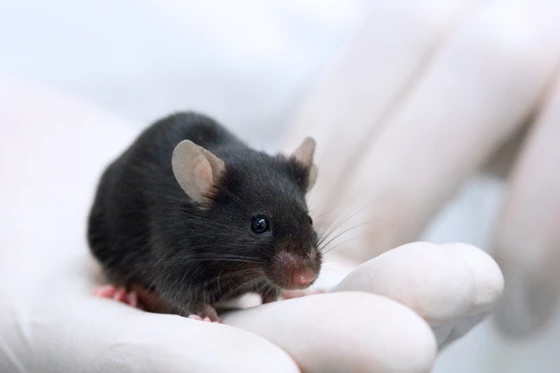
Researchers at the University of Chicago have turned to gene editing techniques to generate new methods to solve the addiction crisis. When you think of “patches” to help curb the effect of drug withdrawal, your first thought might be something akin to a nicotine patch that you adhere to your skin. However, in this case, the team of scientists has genetically altered patches of actual skin in laboratory mice.
Humans naturally synthesize a protein called butyrylcholinesterase (BChE) that breaks down cocaine. This is at the core of the thought process behind the new skin patch. The patch contains an enhanced form of the protein which has been designed by another research group. Keeping the enhanced protein functioning in living animals is difficult, so administering it via injection or pill forms is not an option. The enhanced version of BChE has over 4,000 times the cocaine-hydrolyzing activity as the original, meaning that it breaks down the drug into its harmless component parts so that the addictive pleasure response in the brain is not triggered, completely disincentivizing cocaine use.
In the study, the team used CRISPR-Cas9 to incorporate the enhanced version of the BChE gene into stem cells of mice. These engineered cells produced high levels of the BChE protein. After a few days when the skin had grown into a flat-layer of tissue, it was transplanted into host animals and blood levels of BChE measured. Significant quantities of the cocaine-hydrolyzing protein were observed in the mice’s blood for more than 10 weeks.
Qingyao Kong, a postdoctoral researcher in the Department of Anesthesia & Critical Care at the University of Chicago, and study co-author, said in an article written for The Conversation this week, “we were encouraged to see that engineered human epidermal cells produced large quantities of hBChE [enhanced BChE] in cells cultured in the lab and in mice. This suggests the concept of skin gene therapy may be effective for treating cocaine abuse and overdose in humans in the future.”
CRISPR Confirms Non-Coding Mutations Cause Colorectal Cancer
A team of researchers based at the Institute of Cancer Research in London, UK, have used high-throughput chromosome conformation capture (CHi-C) to sift through non-coding areas of colorectal cancer genome. The team assessed 19,023 promoter fragment sites in two cells lines (HT29 and LoVo). The results, paired with corresponding whole-genome sequencing, RNA sequence-based gene expression profiles, and copy number data generated for the Cancer Genome Atlas project, led them to a regulatory mutation in the ETV1 promoter. Subsequent analyses suggested that mutations to the ETV1 promoter can influence the expression of colorectal cancer oncogenes, alongside regulatory regions of the RASL11A gene.
After this substantial volume of detective work, CRISPR confirmed what the researchers were thinking. The team found that CRISPR-mediated deletions in the promoter could dial down RASL11A expression, while amplifications affecting the regulatory elements were linked to increased RASL11A expression.
This study provides new insights into the complex web of genetics that drive tumor development and acts as a proof of concept for use of chromosome conformation capture to decipher potential links between non-coding regions of the gene, and cancer development.
CRISPR Screen Identifies Genes That Help Cells Resist Zika Virus Infection

Researchers at the University of Texas Southwestern Medical Center have reported the first use of CRISPR genome-wide screening to identify a gene that helps cells to resist flavivirus infection. The flavivirus family includes West Nile virus, dengue virus, Zika virus, and yellow fever virus, which cause dangerous infections that cause widespread morbidity and mortality across the world.
The new screening method was developed by Dr. John Schoggins, Assistant Professor of Microbiology, and his team. They used CRISPR technology to identify the IFI6 gene as a potent antiviral gene that specifically targets members of the flavivirus family. The pairing between IFI6 (encoding IFN-α-inducible protein 6), an IFN-simulated gene that was originally cloned over 30 years ago, and HSPA1, which encodes the heat shock protein 70 chaperone BiP that resides in the endoplasmic reticulum. The IFI6 protein protects uninfected cells by preventing the formation of virus-induced invaginations within the membrane of the endoplasmic reticulum.
Following the genome-scale CRISPR-screening, the team used traditional cell culture techniques to confirm the gene’s role in viral protection. "Other studies have used CRISPR genetic screens to identify cellular genes that are required for flavivirus infection. Our study is the first to use this technology to identify cellular genes that inhibit infection," said Dr. Schoggins.
Zika virus has been a major problem in South America in recent years, particularly during the 2016 Olympic games in Rio, but thankfully the threat appears to have waned. Nevertheless, flaviviruses are a significant problem, with pockets of outbreaks being reported frequently. Dengue is an ongoing issue in tropical climates, there is currently an outbreak of yellow fever virus in Brazil, and sporadic cases of West Nile virus have been reported in the United States.
The results of this study apply specifically to human liver cells, additional research is needed to assess how the IFI6 gene may be expressed in other cell types.
CRISPR Therapeutics Collaborates with ViaCyte to Develop Gene Therapy for Diabetes

CRISPR Therapeutics, a biopharmaceutical company focused on developing gene-based treatments for serious diseases, and ViaCyte, a privately held company aiming to produce regenerative medicine, announced a strategic collaboration this week. The partnership will focus on the discovery, development, and commercialization of genome engineered allogeneic stem cell therapies for the treatment of diabetes. ViaCyte has created pancreatic cells out of stem cells, but therapeutic success has been severely limited due to patient’s bodies viewing them as foreign materials and therefore triggering severe immune responses. The ViaCyte team hopes that the expertise from CRISPR Therapeutics will allow them to modify the pancreatic cells with CRISPR to prevent an immune attack.
The two businesses will jointly develop an immune-evasive stem cell line, which will act as a first step on the path to development of an allogeneic stem cell-derived therapy. Following the success of these first steps, the companies then plan to identify a clinical candidate and jointly take forward the development and commercialization of it.
"Creating an immune-evasive gene-edited version of our technology would enable us to address a larger patient population than we could with a product requiring immunosuppression. CRISPR Therapeutics is the ideal partner for this program given their leading gene editing technology and expertise and focus on immune-evasive editing. We are thrilled to have the opportunity to partner with CRISPR Therapeutics on what we believe could be a transformational therapy for patients with insulin-requiring diabetes," said Paul Laikind, Ph.D., Chief Executive Officer and President of ViaCyte, in a press release earlier this week. "We also believe that this approach may have many other applications which we and CRISPR may explore in the future."
CRISPR 101 eBook
CRISPR has quickly become a standard laboratory tool for gene editing. As the adoption of CRISPR accelerates worldwide, up-to-date knowledge of the basics of CRISPR is essential for anyone in the field. From target identification studies to the recent breakthroughs in clinical trials, CRISPR is enabling scientists to unlock the power of the genome.
Download our CRISPR 101 eBook today to stay up to date on all your CRISPR basics and get the best results in your CRISPR experiments!