
A Comprehensive Guide to Mechanisms and Methods
Recombinase Polymerase Amplification (RPA) is a rapid, isothermal nucleic acid amplification technology that offers a powerful alternative to traditional methods like PCR. By operating at a single, low temperature, RPA and its variant, Reverse Transcription RPA (RT-RPA), enable sensitive and specific detection of DNA and RNA sequences. This makes them highly efficient tools for molecular diagnostics, field-based testing, and point-of-care applications where speed and simplicity are essential.
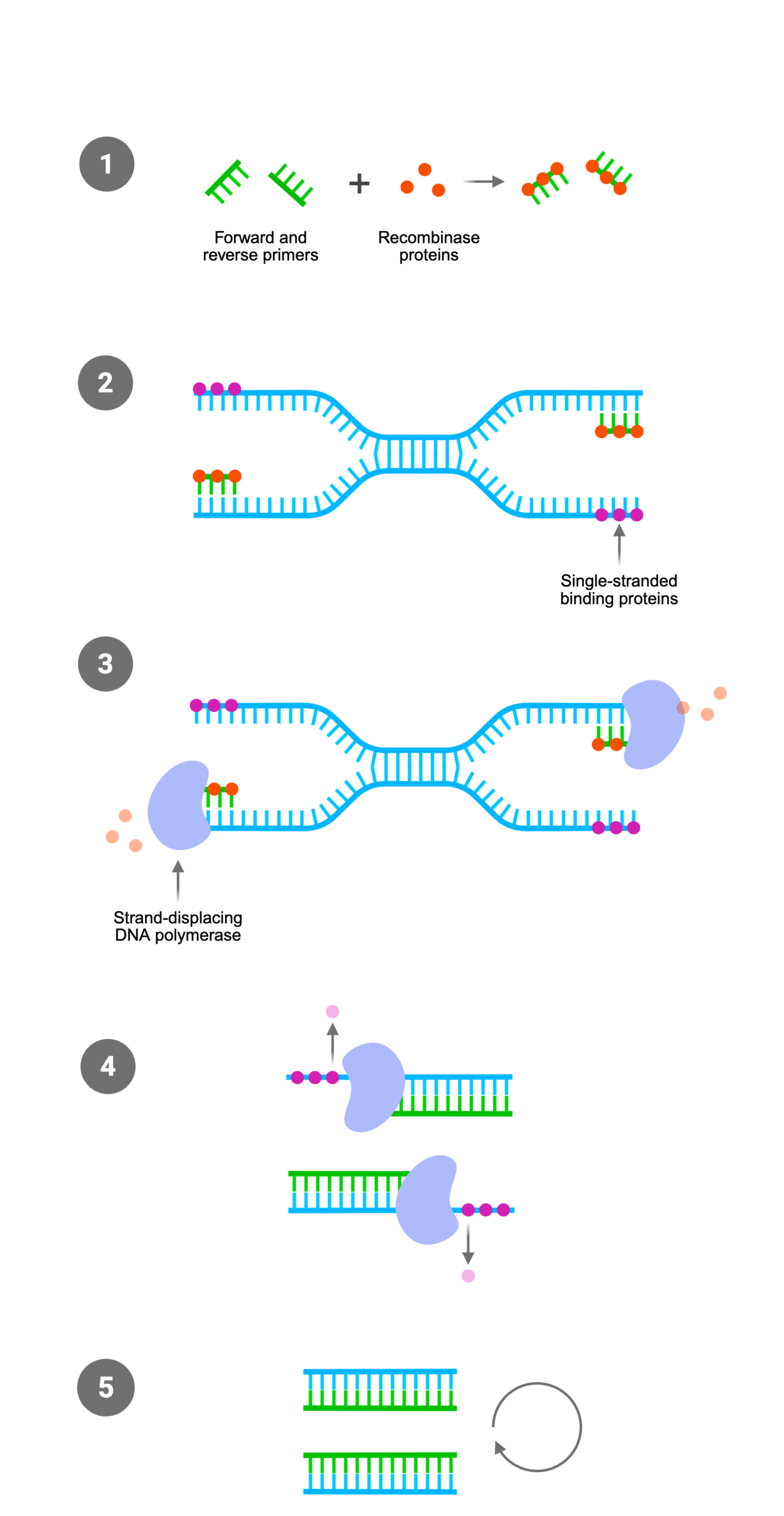
The RPA mechanism mimics natural DNA repair processes, utilizing a unique combination of enzymes to achieve exponential amplification without the need for thermal cycling. In the case of RT-RPA, the process integrates the synthesis of complementary DNA (cDNA) from an RNA template with this isothermal amplification in a single-tube, one-step process. The diagram below illustrates the core stages of the recombinase polymerase amplification reaction, from the formation of nucleoprotein complexes to the final exponential amplification.

Explore our RPA Endpoint Kit and RPA Real-Time Kit to learn more.

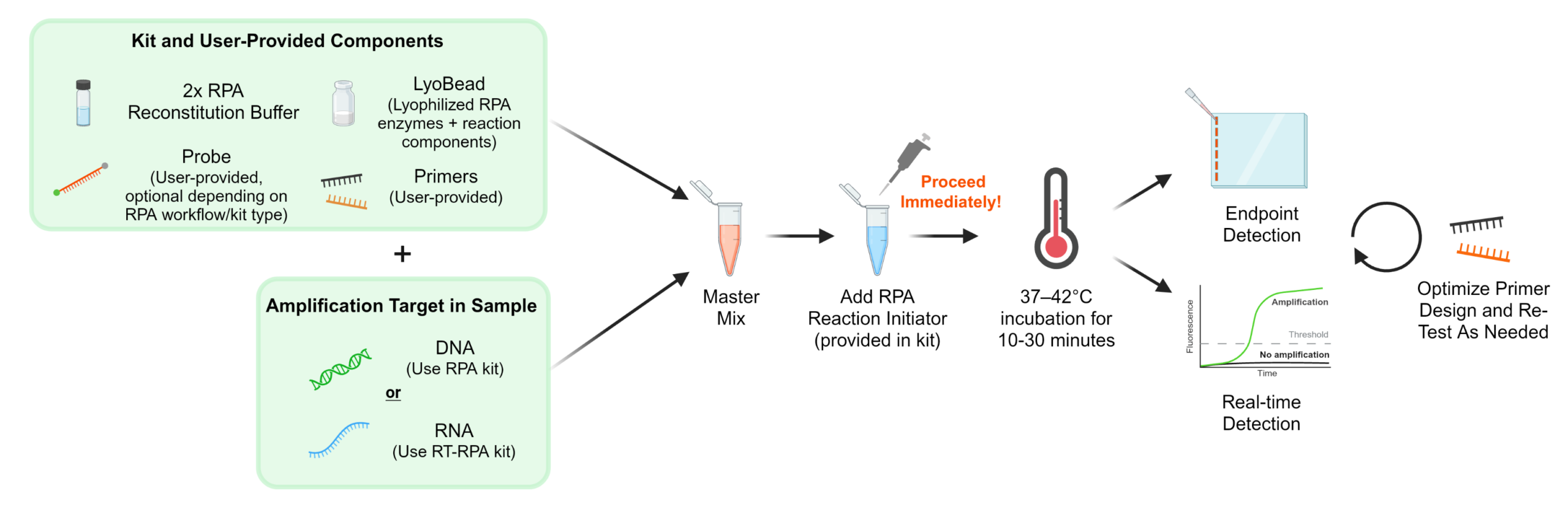
The beauty of these technologies lies in their operational simplicity. Whether you are targeting DNA (RPA) or RNA (RT-RPA), the workflow remains a rapid, single-tube process requiring minimal equipment.
1. Prepare the Master Mix: In a single tube, combine the following to create a master mix. If running multiple reactions, scale accordingly:
2. Reaction Initiation: Transfer the master mix into individual reaction tubes. Pipette the RPA Reaction Initiator into the lid of the reaction tube. Carefully close the tube(s), then briefly centrifuge tubes using a mini centrifuge. This step mixes the Reaction Initiator and master mix, triggering the reaction.
3. Isothermal Incubation: Incubate at a constant temperature (37°C–42°C) using a simple heat block or water bath.
4. Detection: Analyze results in real-time via fluorescence or at the endpoint using lateral flow strips or gel electrophoresis.
To ensure reliable and reproducible results across either assay, keep these three pillars in mind:

| Feature | Recombinase Polymerase Amplification (RPA) | Reverse Transcription RPA (RT-RPA) |
|---|---|---|
| Primary Target | DNA | RNA |
| Key Enzymes | Recombinase, DNA Polymerase | Reverse Transcriptase, Recombinase, DNA Polymerase |
| Workflow | Single-step amplification of DNA | Single-tube reverse transcription and amplification of RNA |
| Applications | DNA-based diagnostics, food safety testing, environmental monitoring | RNA virus detection, gene expression analysis, point-of-care RNA diagnostics |
| Key Advantage | Extremely rapid and simple DNA amplification | Fast and simplified RNA detection without a separate cDNA synthesis step |
Check out our RPA Endpoint Kit and RPA Real-Time Kit to learn more.
Check out our RT-RPA Endpoint Kit and RT-RPA Real-Time Kit to learn more.
Check out our RT-RPA Endpoint Kit and RT-RPA Real-Time Kit to learn more.
Visit our RPA Resource Hub for additional RPA materials.

 Cart
Cart
 Account
 Your Orders
 Sign Out
 Sign In