Cart
Cart
 Account
 Your Orders
 Sign Out
 Sign In


The CRISPR field is moving fast! Don’t worry, we’ve got you covered. Check in every week for a quick summary of the biggest news and developments in genome engineering research so you can stay up to date with what’s happening in the world of CRISPR.
This week we cover hot topics including CRISPR applications in investigating diseases such as muscular dystrophy, perinatal mortality, and Marfan Syndrome. We also discuss technological advances including a new far-red light-activated CRISPR-Cas system for gene regulation and improvements in predicting CRISPR editing outcomes.
CRISPR-Based Muscular Dystrophy Gene Therapy Tested in Dogs

Duchenne muscular dystrophy (DMD) is a genetic disorder that affects young males. According to 2007 statistics, 15 in 100,000 males in the U.S. aged between 5 and 24 were affected by this disease. Mutation in the gene coding for protein dystrophin, which functions like a shock absorber in muscle, results in weak muscles. The disease is often fatal (heart failure) and has no cure.
Researchers have been trying to use the precise CRISPR gene editing technology to develop gene therapy for curing muscular dystrophy. Previous trials were done in mice, but in a recent breakthrough, researchers from the University of Texas Southwestern Medical Center showed data from trials on dogs. They bred dogs that were a mix between beagles and Cavalier King Charles Spaniels to develop a model for muscular dystrophy. These dogs were subjected to gene therapy by injecting CRISPR components into their blood when they were one month old. The researchers observed that the treatment repaired their heart and muscle cells.
This project provides promise for future gene therapy for muscular dystrophy in humans. It is worth noting that there are about 3,000 different mutations that can result in this condition but the researchers targeted just one gene region, exon 51. Although this means that not all types of DMD could be cured by this approach alone, it could potentially alleviate symptoms in 13% of patients if it goes to human clinical trials in the future.
A New FACE for CRISPR Gene Regulation

CRISPR-Cas9 is no longer just a cut and paste technology. An important application of this technique has been in tuning gene expression. The CRISPRa (for gene activation) and CRISPRi (for gene inhibition) generally deploy a dead Cas9 nuclease (dCas9) attached to a transcription regulator. Scientists have been trying to make this system even more sophisticated by triggering gene regulation using light. While blue light has been commonly used to activate light-sensitive proteins that induce downstream cell signaling pathways, it is toxic for cells.
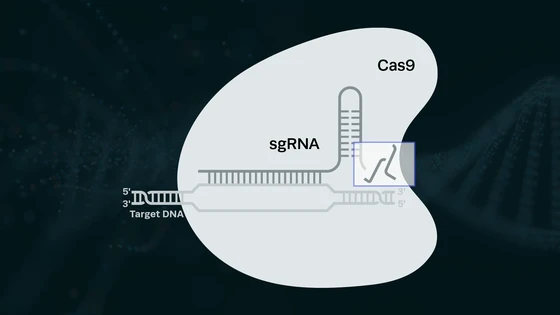
Researchers have now come up with a far-red light (FRL)-activated CRISPR-dCas9 effector (FACE) system that shows reduced toxicity in cells. The method involves a light-sensitive protein that dimerizes upon activation by far-red light, resulting in expression of activators. Using an sgRNA-dCas9 complex that binds to these activators, specific genes can be upregulated. The team demonstrated this capability of their system by differentiating induced pluripotent stem cells to neurons by upregulating one of the transcriptional factors.
This system provides a convenient way of studying biological questions. Importantly, the ability to non invasively alter protein expression inside mammalian cells sets the foundation for future regenerative medicinal therapies. In fact, optogenetics is already being tested especially for neural implants and holds great promise for developing neuroprosthetics in the future.
Using CRISPR Base Editing to Reduce Transmission of Marfan Syndrome Mutations

Marfan syndrome is a genetic disease that affects 0.2% of the world’s population. It is caused by mutations in the FBN1 gene, which is responsible for making the fibrillin-1 protein. Once synthesized, fibrillin-1 moves into the extracellular matrix, forming large complexes with itself and other proteins to form threadlike filaments called microfibrils. Microfibrils then form elastic fibers that enable skin, ligaments, and blood vessels to stretch.
The most serious consequences of FBN1 mutations are an increased risk of mitral valve prolapse, aortic aneurysm, and scoliosis. Marfan syndrome is categorized as an autosomal dominant disorder, meaning that if one of the two copies of the gene present each cell is mutated, that person will be affected by the disease. When a parent has Marfan syndrome, each of their children has a 50% chance of passing it on.
Researchers based at the Guangzhou Medical University and ShanghaiTech University in China have used a CRISPR-based technique to reduce the odds of transmitting the Marfan syndrome from parent to child. The base editor (BE) system that they developed was constructed by fusing deaminase and dCas9 proteins. This variation on CRISPR enables researchers to selectively edit DNA bases to produce fewer unwanted edits than the standard CRISPR-Cas9 technology. Base editors modify specific DNA sites, for example converting C to T or G to A. BE has already been used in plants and animals, and this new research provides a much-needed proof of concept that it could also be used in humans.
The team, led by Yanting Zeng and Xingxu Huang focussed on the FBN1 mutation that is causative for Marfan syndrome. To increase the relevance of this study to patients, the team focused on a specific mutation found in an adult male patient diagnosed with Marfan syndrome; the man had an A base (adenine) rather than a G base (guanine) at a specific location within the FBN1 gene. The team used the BE system to swap A to G in 18 embryos, and in all cases the intended bases were edited as planned. While these results are exciting, there definitely needs to be more research and refinement of this technique before it can be used within a clinical setting.
Predicting the Outcome CRISPR-Cas9 Editing Events
When most scientists think of CRISPR, they probably think about the process by which Cas9 is directed to a specific DNA site by a guide RNA, the target site is cut to create a double-strand break (DSB), and the DSB is repaired by the “error-prone” or “random” non-homologous end joining (NHEJ) repair pathway. It turns out that it isn’t that simple.
The repair of DSBs is far from random. The outcomes of repairing the cuts depend on the DNA sequences around the breaks and the cell type the editing is performed in. New research from scientists at the Wellcome Sanger Institute is looking at this issue in detail. They developed a high-throughput assay to investigate over a billion different CRISPR repair results from in vitro editing experiments that were set up to replicate editing the real genes in cells.
This report was published in bioRxiv, meaning that it has not yet been through the rigorous peer-review process, but it is exciting to see more research coming out that is aimed at improving the predictability of CRISPR editing outcomes.
CRISPR Reveals Function of SIRT6 Protein in Primates

There is a vast diversity of proteins controlling cell function in mammals; some proteins are conserved across species, while some have species-specific functions. Researchers have been curious about one such protein, SIRT6. This protein is involved in the longevity of rodents but its exact role in primates has not been clear so far.
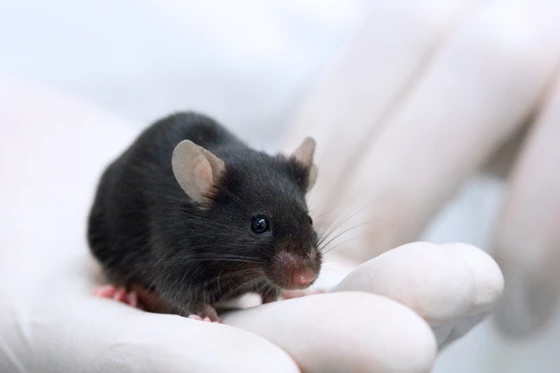
Researchers in China have widely adopted CRISPR experiments in primates to answer several biological questions. One research team set out to determine the function of SIRT6 protein, reporting their findings in Nature. They injected the CRISPR-Cas machinery targeting the gene coding for this protein in monkey zygotes. They implanted these manipulated zygotes in females and observed that the resulting mutated babies were smaller in size than normal ones. The newborns also showed signs of developmental retardation.
Although a direct link to humans has not yet been established, researchers believe that the SIRT6 protein might play a similar role in humans and might be involved in regulating development. Understanding this further might help prevent perinatal lethality syndrome (death of babies just before or after birth).
CRISPR 101 eBook
CRISPR has quickly become a standard laboratory tool for gene editing. As the adoption of CRISPR accelerates worldwide, up-to-date knowledge of the basics of CRISPR is essential for anyone in the field. From target identification studies to the recent breakthroughs in clinical trials, CRISPR is enabling scientists to unlock the power of the genome.
Download our CRISPR 101 eBook today to stay up to date on all your CRISPR basics and get the best results in your CRISPR experiments!