Cart
Cart
 Account
 Your Orders
 Sign Out
 Sign In

Editor's Note (2026): This article was originally published during the early development of CRISPR-based viral diagnostics and vector control strategies. While written in the context of initial public health efforts surrounding the Zika virus epidemic, CRISPR technology has since matured into a foundational tool for both point-of-care infectious disease diagnostics and population-level vector control.
Since publication, diagnostic approaches leveraging Cas12 and Cas13 nucleases alongside isothermal amplification (such as RPA and LAMP) have transitioned from proof-of-concept research to field-deployable platforms. Explore our latest resources below for updated perspectives on molecular diagnostics, isothermal methods, and gene editing workflows.
- The Rise of CRISPR Diagnostics
Learn how CRISPR-based detection works, where it is being applied, and how this technology continues to shape the future of molecular testing. - How to Build an RPA-CRISPR Assay for Rapid Diagnostics
Discover how isothermal amplification methods like RPA can be integrated with CRISPR detection workflows to enable rapid nucleic acid testing. - Molecular Diagnostics in Infectious Disease: From PCR to Rapid Isothermal Methods
Explore how PCR, RPA, and emerging molecular technologies are being used to address challenges in infectious disease detection. - RPA vs. LAMP: Choosing the Right Isothermal Amplification Method
Compare two leading isothermal amplification approaches and understand how they fit different molecular diagnostic applications.
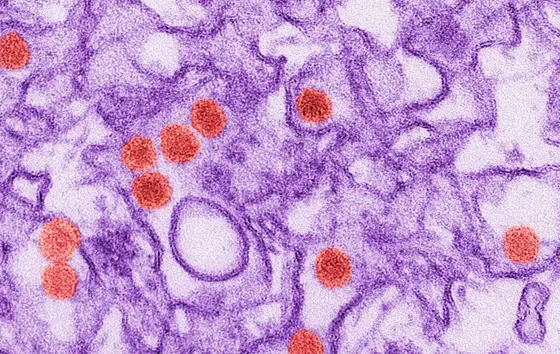
Zika virus
noun Zi·ka virus \ˈzē-kə-\
A virus transmitted by mosquitoes which typically causes mild infection (fever, rash, joint pain) in humans. The Zika virus is a flavivirus transmitted by mosquitoes of the species Aedes aegypti.
When the World Health Organization (WHO) declared the Zika outbreak a global health emergency, it launched a coordinated strategy to accelerate research, response, and diagnostic development. At the height of the outbreak surrounding the 2016 Rio Olympics, public health agencies went great lengths to prevent Zika virus transmission among athletes.
So why is everyone so worried about Zika?
Well, Zika is different. If you’re pregnant—or planning to be anytime soon—it’s a major cause for concern. Beyond mosquito bites, the virus can be sexually transmitted, and scientists have confirmed it can cause microcephaly (unusually small heads) in newborns, as well as Guillain-Barré syndrome (a scary neurological disorder that can lead to paralysis).
Back when the epidemic first spiked, it caught the world off guard. But understanding these severe risks made one thing crystal clear: we urgently needed better tools to diagnose, track, and stop the virus in its tracks.
That all sounds pretty terrifying, but how can we stop it?
In basic terms, fighting a viral threat like Zika comes down to three things:
- Improving diagnosis
- Improving treatment
- Improving prevention
Sounds simple, right? Not quite. Zika is notoriously tricky to manage because its primary delivery vehicle is the mosquito. And as anyone who has ever spent a summer outdoors knows, those little bloodsuckers are nibbling away before you even realize they're there.
How can CRISPR help?
So, how can CRISPR technology step in and help save the day? It turns out CRISPR can help us tackle two out of those three challenges: diagnosis and prevention. That’s a massive win-win!
Diagnosis: Detecting Viral RNA with CRISPR Precision
Symptoms of Zika fever can easily be confused with other flaviviruses like Dengue or Chikungunya, as well as common seasonal flu. Rapid, highly specific diagnosis is critical—especially for protecting pregnant individuals and preventing community transmission.
Early on, researchers at Harvard’s Wyss Institute built a low-cost, super-quick diagnostic tool that screened patient blood, urine, or saliva right in the field. The magic behind it? A "diagnostic sandwich" powered by CRISPR/Cas9. Once viral RNA was amplified, the sample met a freeze-dried CRISPR cocktail applied to paper discs. If Zika was present, the discs changed color—distinguishing between viral strains in just a few hours without needing a lab full of expensive equipment. Read the full press release from the Wyss Institute at Harvard here.
The Modern CRISPR Diagnostic Toolkit
Since those early breakthroughs, CRISPR diagnostics have expanded significantly beyond initial Cas9 prototypes:
-
Cas12 and Cas13 Collateral Cleavage: Modern molecular diagnostic workflows frequently utilize Cas12 (DNA-targeting) and Cas13 (RNA-targeting) enzymes. When these nucleases bind their target sequence, they activate non-specific reporter cleavage, releasing a detectable fluorescent or lateral-flow signal.
-
Isothermal Pre-Amplification: To detect ultralow viral loads in field settings, CRISPR detection is routinely combined with isothermal amplification methods such as Recombinase Polymerase Amplification (RPA) or Loop-Mediated Isothermal Amplification (LAMP). This allows target DNA or RNA to be amplified at a constant temperature without complex thermocycling equipment.
Explore Our RPA Kits to Power Your Diagnostics
Achieve reliable, reproducible results with Synthego’s RPA & RT-RPA kits for both endpoint and real-time detection. Engineered for efficiency, specificity, and seamless workflow integration.

Prevention: Engineering Mosquitoes with CRISPR
Finding sick people with fast diagnostics is great, but what if we stopped the virus before it ever reached a human host?
That brings us to vector control—a fancy way of saying "dealing with the mosquitoes." But here’s the biological plot twist: male mosquitoes don't bite humans. They’re content sipping plant nectar. It’s only the blood-thirsty females that bite, lay eggs, and pass along viruses like Zika. Naturally, scientists asked: Can we use CRISPR to rewrite the rules of mosquito biology? Absolutely. And researchers are testing two main ways to do it:
Strategy A: Population Suppression (Crash the Population)
Instead of spraying toxic chemical insecticides everywhere, researchers use CRISPR-based gene drives or precision sterile insect techniques (pgSIT) to target essential female genes:
-
Sex-Distortion Drives: By targeting key sex-determination genes (like doublesex), CRISPR can ensure that female offspring inherit crippling developmental edits, converting them into sterile or intersex mosquitoes.
-
Flightless Females: Disrupting genes like myo-fem leaves female mosquitoes incapable of flying, rendering them unable to hunt for blood meals or reproduce.
Over just a few generations, target wild populations drop dramatically.
Strategy B: Population Replacement (Build a "Viral Dead End")
What if we don't eradicate the mosquito, but just turn it into a terrible host for Zika?
By using CRISPR to knock out essential host proteins the virus needs to replicate or by engineering mosquitoes to express anti-viral effector molecules, scientists can create genetically resistant mosquito lines. If a mosquito bites an infected person, the virus simply dies inside the insect before it can ever be passed to the next host.
The Path Ahead for CRISPR and Vector-Borne Diseases
What started as a rapid-response effort during the Zika epidemic has fundamentally transformed how we approach infectious disease management. CRISPR isn’t just a laboratory tool for basic research—it’s a dynamic, two-fold platform providing point-of-care diagnostics in minutes and environmentally targeted vector control in the wild.
As field applications scale and regulatory frameworks mature, one lesson remains clear: whether you are designing attomolar-sensitivity diagnostic strip tests or executing high-efficiency gene drive studies, the quality of your genome editing reagents determines the reliability of your results. Off-target effects and inconsistent editing rates aren't just technical headaches—in diagnostic and vector control contexts, they're project-stoppers. Achieving reproducible, high-precision results starts with optimized target selection and synthetic reagents designed for scale.
CRISPR Solutions For Every Milestone
Synthego is redefining the way CRISPR-based therapies are developed. With robust offerings that span research-grade products to preclinical solutions and GMP-grade manufacturing, our continuum of CRISPR solutions supports scientists and developers at every step of their journey.