Learn more Webcast featuring eSpOT-ON
Explore More eSpOT-ON Nuclease Protein Available Now
Explore More Order eSpOT-ON Nuclease mRNA Now
PRODUCT

Hot-Start Taq DNA Polymerase

Antibody‑mediated hot‑start for high specificity

Antibody-based Hot-Start Taq DNA Polymerase ensures exceptional specificity and yield in demanding PCR applications. Inactive during setup and rapidly activated by heat, it minimizes primer-dimer formation and nonspecific amplification, enabling clean, reproducible results across diverse templates up to 5 kb.

  • Antibody-mediated Hot-Start for fast, precise activation
  • High specificity and sensitivity with minimal background
  • Robust amplification of low-copy or GC-rich templates
  • Ready-to-use format with optimized reaction buffer and MgCl₂

Select a Size

Hot-Start Taq DNA Polymerase (250 U)

#EM15HSDNA-Sm

Product Specifications

Product Number EM15HSDNA
Function Antibody-mediated hot start; Release on denaturation
For Use In Room-temp setup, high-specificity PCR
Molecular Weight 94 kDa
Concentration 5 U/µL
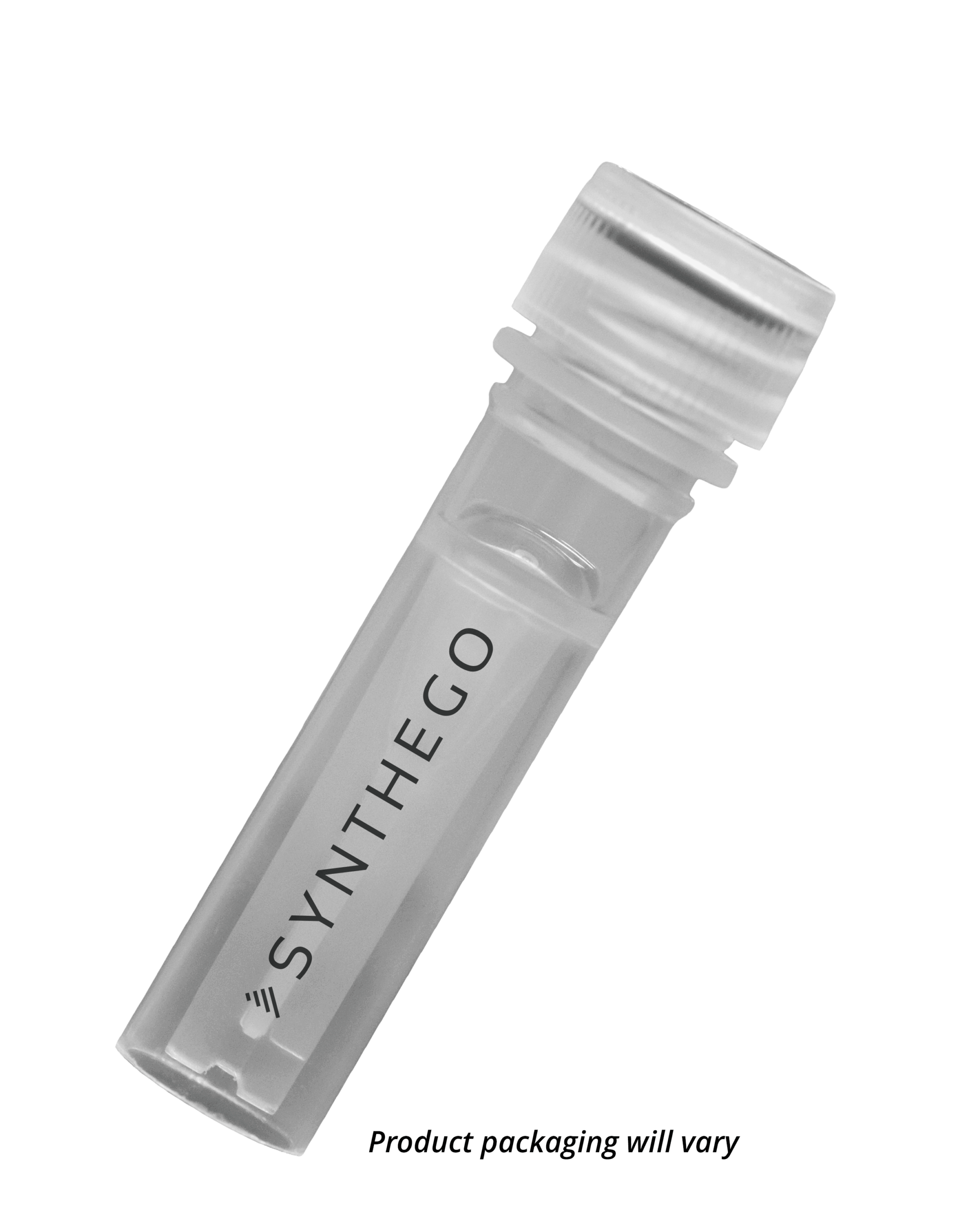
Delivery Format Tubes
Intended Use This product is intended for research use only
Source Recombinant E. coli
Shipping Conditions Cold Pack
Storage Temperature -20 C
Stability ≥12 months

Optimized for Demanding PCR Applications

Hot Start DNA Polymerase is a highly pure, thermostable enzyme designed for demanding PCR applications requiring exceptional specificity, sensitivity, and robustness. The enzyme utilizes antibodies to block polymerase activity at ambient temperatures, which dissociate after the initial denaturation step at 95°C. This automatic 'hot start' mechanism enhances sensitivity, specificity, and yield, while also allowing for reaction assembly at room temperature. Optimized for the amplification of 0.1–3 kb DNA targets, this enzyme delivers high yields, even from low copy number templates. Its advanced formulation includes an optimized buffer system and compatibility with high-quality dNTPs, ensuring reliable performance across a broad range of amplicons.

Hot Start DNA Polymerase is resistant to PCR inhibitors, such as blood (up to 20%), ethanol, and humic acid, making it ideal for challenging samples with carry-over inhibitors. Additionally, it is well-suited for GC-rich templates (up to 70%). This enzyme is a versatile tool for routine PCR, RT-PCR, and TA cloning, offering excellent specificity and sensitivity for both standard and demanding workflows.

Key Features

  • Exceptional Purity: Ensures reliable performance for routine and challenging PCR applications.
  • Optimized Buffer Composition: Increases amplification yield and supports robust performance.
  • Inhibitor Resistance: Enables amplification from DNA templates with carry-over inhibitors like blood, ethanol, or humic acid.
  • Broad Specificity and Sensitivity: Suitable for a wide range of amplicons, including low copy number targets and GC-rich templates.

Applications

  • Routine and Demanding PCR: Amplify DNA targets up to 5 kb with high yield and precision.
  • Low Copy Number Amplification: Ideal for detecting and amplifying low-abundance targets.
  • RT-PCR and TA Cloning: Compatible with RNA-to-cDNA workflows and cloning into T-overhang vectors.

Technical Highlights

  • Recommended Annealing Temperature: 2°C above primer Tm; gradient PCR is recommended for optimization.

Custom Options

We offer flexible customization to meet your specific needs:

  • Volume: Optimize packaging sizes to match your application scale.
  • Concentration: Customize concentrations for optimal performance.
  • Formulation: Available in liquid and lyophilized formats to suit your protocols.
  • Master Mix Creation: Custom manufacturing of PCR master mixes based on your optimized formulations.

Quality

One unit is defined as the amount of enzyme required to catalyze the incorporation of 10 nmol of dNTP into acid-soluble form in 30 minutes at 72°C in the presence of the reaction buffer.

Functional assay
Human genomic DNA was amplified using the DNA Polymerase and specific primers to produce a distinct band of 750 bp.

Self-priming activity
Standard PCR is carried out without primers, using the DNA Polymerase and human genomic DNA. No products were amplified.

Exonuclease assay
Linearized lambda/HindII fragments are incubated with the DNA Polymerase in a 50 µl reaction mixture for 4 h at 37°C. No degradation of DNA was observed.

Endonuclease assay
lambda DNA is incubated with the DNA Polymerase in a 50 µl reaction mixture for 4 h at 37°C. No degradation of DNA was observed.

Nick Activity
Supercoiled plasmid DNA is incubated with the DNA Polymerase in a 50 µl reaction mixture for 4 h at 37°C. No conversion of covalently closed circular DNA to nicked DNA was detected.

Contamination with E. coli DNA
A sample of the denatured DNA Polymerase is analyzed with specific primers targeting the 16S rRNA gene in qPCR for the presence of contaminating E. coli DNA. No E. coli was detectable.

Frequently Asked Questions

Why is the recommended annealing temperature for the Hot-Start Taq DNA Polymerase different from the commonly seen "5°C below primer Tm"?
The enzyme and its buffer system are optimized for a slightly higher melting temperature for researchers to begin with aiming for a better specificity and sensitivity for assays in general.

Since each assay is unique, we strongly recommend performing a gradient PCR as part of the optimization to identify the most suitable annealing temperature for your specific design.

Ready to get started?

Get in touch