Learn more Updated Shipping Rates and Promotions
Explore More eSpOT-ON Nuclease Protein Available Now
Explore More Order eSpOT-ON Nuclease mRNA Now
PRODUCT

Engineered M‑MuLV Reverse Transcriptase

Engineered M‑MuLV for first‑strand cDNA synthesis

Engineered M‑MuLV RT with reduced RNase H activity and increased thermostability supports reverse transcription up to 55 °C. Generate long cDNA and start RNA‑seq libraries with reliable performance on structured RNAs.

  • Reduced RNase H activity with greater thermostability
  • RT up to 55°C for structured templates
  • Generates long cDNA for downstream PCR
  • Ideal for RNA‑seq library starts

Select a Size

Engineered M‑MuLV Reverse Transcriptase (20,000 U)

#EM16EMMULV-Sm

Product Specifications

Product Number EM16EMMULV
Molecular Weight 77 kDa
Function RNA-dependent DNA polymerase with reduced RNase H
For Use In cDNA synthesis; RT-PCR; Library initiation
Concentration 200 U/µL
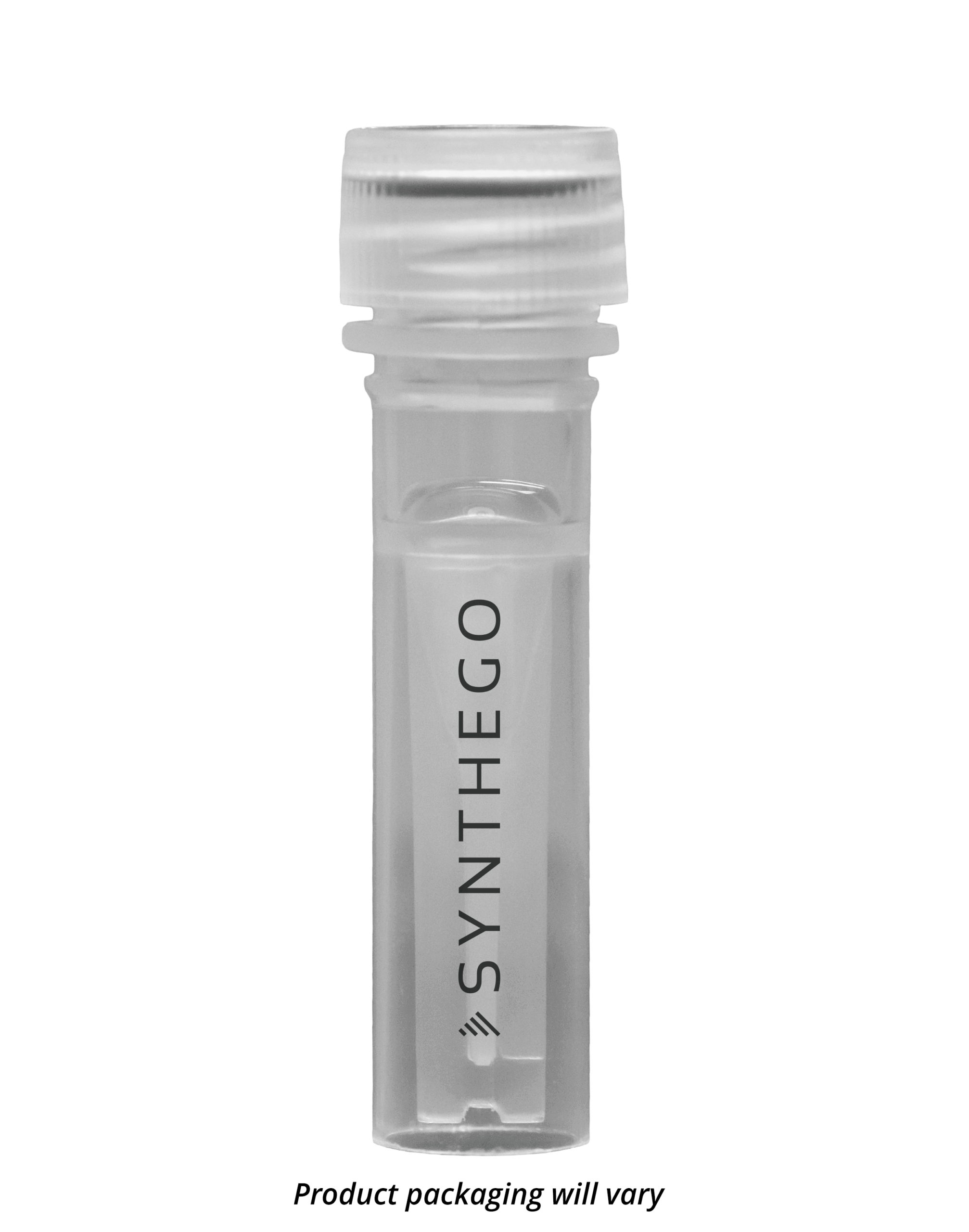
Delivery Format Tubes
Intended Use This product is intended for research use only
Volume 100 µL
500 µL
Source Recombinant E. coli
Shipping Conditions Cold Pack
Storage Temperature -20°C
Stability ≥12 months
Description

Engineered M-MuLV for First-Strand cDNA Synthesis

Synthego’s Reverse Transcriptase is a genetically engineered M-MuLV Reverse Transcriptase designed for exceptional performance in cDNA synthesis and RT-PCR applications. With increased thermostability and reduced RNase H activity, our engineered M-MuLV delivers high yields of full-length cDNA, even for longer templates, making it a reliable choice for demanding workflows.

This ultrapure enzyme is free of RNases and nucleases, ensuring optimal reaction conditions and preventing degradation of RNA templates. It is active at temperatures up to 55°C, enabling first-strand cDNA synthesis at higher temperatures, which improves specificity and reduces secondary structure interference. It is ideal for both two-step and one-step RT-PCR and qRT-PCR, offering superb sensitivity and specificity, even with low template inputs.

Key Features

  • Increased Thermostability: Active up to 55°C for improved specificity and reduced secondary structure interference.
  • Exceptional Performance: High-yield and full-length cDNA synthesis, even for longer templates.
  • Ultrapure Enzyme: Free of RNases and nucleases to ensure reliable and contamination-free reactions.
  • Versatile Applications: Tailored for both two-step and one-step RT-PCR and qRT-PCR workflows.

Applications

  • First-Strand cDNA Synthesis: High-yield synthesis of full-length cDNA for downstream applications.
  • cDNA Library Construction: Ideal for generating high-quality cDNA libraries.
  • RT-PCR and qRT-PCR: Delivers high sensitivity and specificity, even with low template inputs.

Custom Options

We offer flexible customization to meet your specific needs:

  • Volume: Optimize packaging sizes to match your application scale.
  • Concentration: Customize concentrations for optimal performance.
  • Formulation: Available in liquid and lyophilized formats to suit your protocols.

Quality

One unit is the amount of enzyme activity that incorporates 1 nmol of dTTP into acid insoluble fraction in 10 minutes at 42°C when poly(A)+ RNA and oligo(dT)20 are used as template–primer.

Exonuclease assay
Linearized lambda/HindIII fragments are incubated with the Reverse Transcriptase in a 50 µl reaction mixture for 4 hours at 37°C. No degradation of DNA was observed.

Endonuclease/Nick Activity
Supercoiled plasmid DNA is incubated with the enzyme in a 50 µl reaction mixture for 4 hours at 37°C. No conversion of covalently closed circular DNA to nicked DNA detected.

Contamination with E. coli DNA
Absence of E. coli genomic DNA is confirmed by qPCR using a sample of the enzyme and specific primers targeting the E. coli 16S rRNA gene. No contamination detected.

RNase Assay
An RNA template is incubated with the enzyme in a 20 µl reaction mixture for 1 hour at 42°C. No RNA degradation observed.

Functional Assay
cDNA synthesis with oligo(dT) and/or hexamer primers, followed by PCR.

Frequently Asked Questions

Which primers can be used with Engineered M-MuLV Reverse Transcriptase?

Common primer options include:

- Oligo(dT) primers: Target poly(A) tails of mRNA and enrich for mature transcripts
- Random primers: Enable broad cDNA synthesis from various RNA species
- Gene-specific primers: Provide targeted reverse transcription of specific RNA transcripts

Can Engineered M-MuLV Reverse Transcriptase be used for qRT-PCR?
Yes. Synthego's Engineered M-MuLV Reverse Transcriptase can be used to generate cDNA templates for quantitative PCR workflows. Explore our guide to learn more.
How much RNA template should be used for reverse transcription?

The recommended RNA input depends on the reverse transcription protocol and downstream application. We recommend using at least 50 ng of RNA template in your reactions.

How can I increase my yields using Engineered M-MuLV Reverse Transcriptase?

High-quality template RNA is one of the most important factors for maximizing cDNA yield. Include Synthego RNase Inhibitor in your RNA isolation, optimize primers used for your reverse transcription, and ensure appropriate reaction conditions.

Can I use the cDNA generated from this enzyme directly in qPCR without purification?

Yes. The workflow described is a two-step RT-PCR process, where cDNA is synthesized in an initial reaction and the resulting product is transferred directly—without prior purification—into a separate downstream PCR. Up to 10 µL of the finished cDNA mix can be used per 50 µL qPCR volume.

While this FAQ addresses two-step workflows, the Engineered M-MuLV Reverse Transcriptase enzyme itself is versatile and formulated for both one-step and two-step RT-PCR/qRT-PCR:

  • Two-Step RT-qPCR: cDNA synthesis and qPCR occur in separate tubes. This offers flexibility to store cDNA long-term at -20°C or perform multiple downstream PCR analyses from a single reverse transcription reaction.
  • One-Step RT-qPCR: Reverse transcription and qPCR take place sequentially within the same reaction tube using a single mix. This minimizes hands-on time, reduces pipetting errors, and limits the risk of contamination.

Ready to get started?

Get in touch