Learn more Updated Shipping Rates and Promotions
Explore More eSpOT-ON Nuclease Protein Available Now
Explore More Order eSpOT-ON Nuclease mRNA Now
PRODUCT

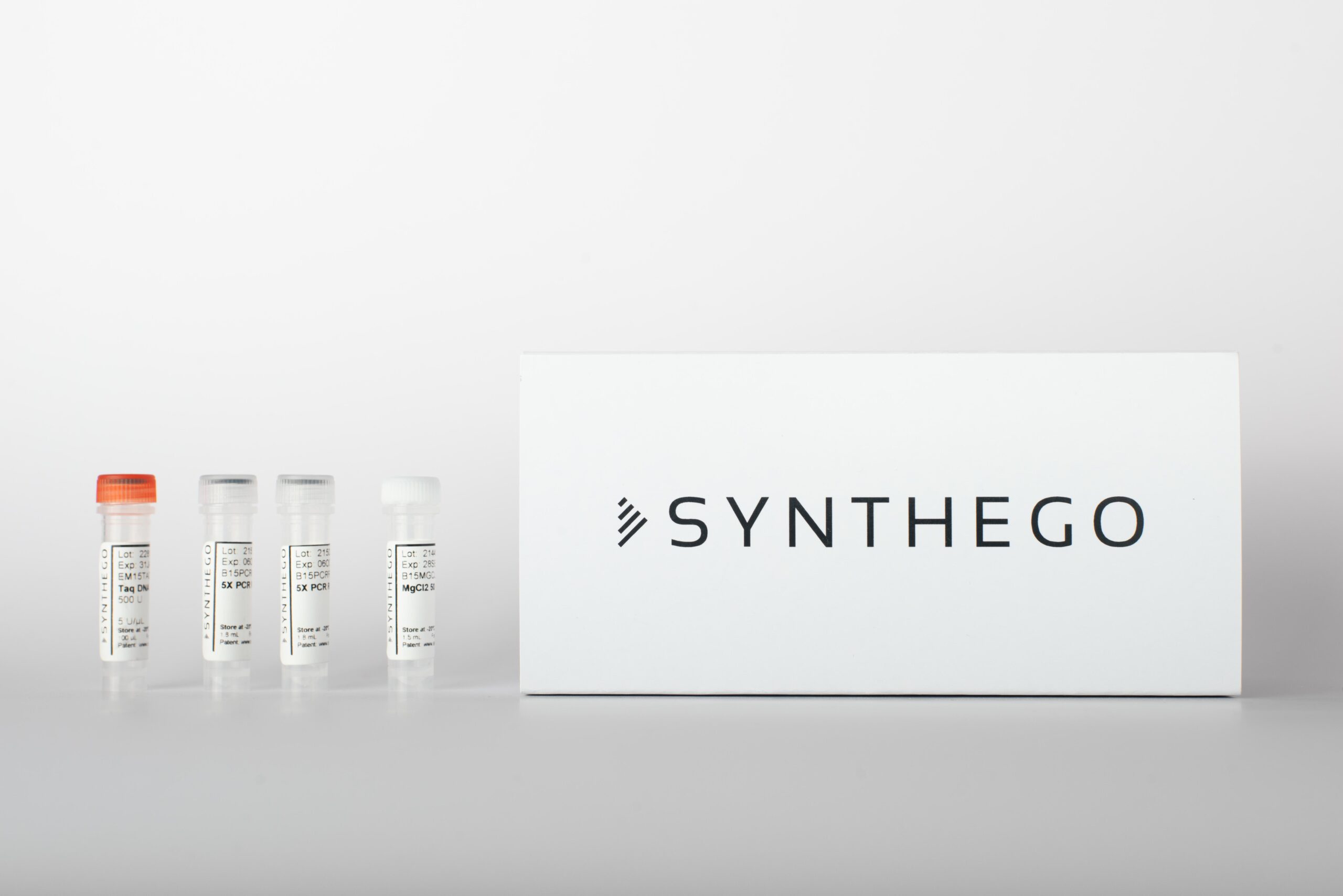
Taq DNA Polymerase

Robust thermostable polymerase for routine PCR

Standard 5′→3′ DNA polymerase with low 5′→3′ exonuclease activity and no proofreading. Adds 3′‑A overhangs for TA cloning. Reliable amplification across typical templates and buffers for everyday PCR and genotyping.

  • Adds 3′‑A overhangs suitable for TA cloning
  • Reliable across common buffers and templates
  • Ideal for routine PCR and genotyping
  • Low 5′→3′ exonuclease activity and no proofreading

Select a Size

Taq DNA Polymerase (500 U)

#EM15TAQDNA-Sm

Product Specifications

Product Number EM15TAQDNA
Function 5' -> 3' polymerase; Low 5' -> 3' exonuclease activity; No proofreading
For Use In Routine PCR; Genotyping; Colony PCR; TA cloning
Molecular Weight 94 kDa
Concentration 5 U/µL
Delivery Format Tubes
Intended Use This product is intended for research use only
Volume 100 µL
500 µL
Source Recombinant E. coli
Shipping Conditions Cold Pack
Storage Temperature -20°C
Stability ≥12 months

Robust Thermostable Polymerase for Routine PCR

Taq DNA Polymerase is a thermostable enzyme originally derived from the thermophilic bacterium Thermus aquaticus. It catalyzes the 5' to 3' synthesis of DNA and is widely recognized for its robust performance in a variety of PCR applications. Known for its robust performance and versatility, Taq Polymerase is a trusted choice for routine PCR, RT-PCR, and TA cloning workflows. Its ability to deliver high product yields from a variety of templates, combined with its compatibility with both standard and fast PCR protocols, makes it an essential tool for molecular diagnostics and research laboratories.

Key Features

  • High Product Yields and Robustness: Delivers consistent results across a wide range of applications and templates.
  • Exceptional Purity: Ensures reliable performance for both routine and demanding PCR workflows.
  • Versatility: Suitable for standard PCR, fast PCR, and RT-PCR applications.
  • Thermostable and Processive: A 5'→3' DNA polymerase with low 5'→3' exonuclease activity, ideal for efficient amplification.

Applications

  • Routine and Applied PCR: Amplify DNA targets up to 3 kb with ease.
  • RT-PCR: Perfect for RNA-based workflows when paired with reverse transcriptase.
  • TA Cloning: The enzyme’s deoxynucleotidyl transferase activity adds an extra A overhang to PCR products, enabling seamless cloning into T-overhang vectors.

Technical Highlights

  • No Proofreading Activity: Lacks 3'→5' exonuclease activity, allowing the incorporation of modified nucleotides for specialized applications.
  • Deoxynucleotidyl Transferase Activity: Adds A overhangs to PCR products, simplifying downstream cloning workflows.
  • Recommended Annealing Temperature: 2°C above primer Tm; gradient PCR is suggested for optimization.

Custom Options

We offer flexible customization to meet your specific needs:

  • Volume: Optimize packaging sizes to match your application scale.
  • Concentration: Customize concentrations for optimal performance.
  • Formulation: Available in liquid and lyophilized formats to suit your protocols.
  • Master Mix Creation: Custom manufacturing of PCR master mixes based on your optimized formulations.

Quality

One unit is defined as the amount of enzyme required to catalyze the incorporation of 10 nmol of dNTP into acid-insoluble form in 30 minutes at 72°C in the presence of the reaction buffer.

Functional assay
Human genomic DNA was amplified using the DNA Polymerase and specific primers to produce a distinct band of 750 bp.

Self-priming activity
Standard PCR is carried out without primers, using the DNA Polymerase and human genomic DNA. No products were amplified.

Exonuclease assay
Linearized lambda/HindII fragments are incubated with the DNA Polymerase in a 50 µl reaction mixture for 4 h at 37°C. No degradation of DNA was observed.

Endonuclease assay
lambda DNA is incubated with the DNA Polymerase in a 50 µl reaction mixture for 4 h at 37°C. No degradation of DNA was observed.

Nick Activity
Supercoiled plasmid DNA is incubated with the DNA Polymerase in a 50 µl reaction mixture for 4 h at 37°C. No conversion of covalently closed circular DNA to nicked DNA was detected.

E. coli DNA contamination assay
A sample of the denatured DNA Polymerase is analyzed with specific primers targeting the 16S rRNA gene in qPCR for the presence of contaminating E. coli DNA. No E. coli DNA was detectable.

Frequently Asked Questions

What are the differences between Taq DNA polymerase, Hot Start DNA polymerase, and High-Fidelity Hot-Start DNA polymerase?
Standard Taq DNA Polymerase is a thermostable DNA polymerase that works optimally at 72°C; however, it can be active at lower temperatures. Hot Start DNA Polymerase includes antibodies that block room-temperature amplification before the initial denaturation step, enhancing specificity and providing convenient assembly at room temperature. High-Fidelity Hot-Start DNA Polymerases have the same benefits but are further enhanced with 3'→5' exonuclease (proofreading) capabilities, making them approximately 50 times more accurate than standard Taq polymerases. To learn more, explore our resource on choosing the right DNA polymerase for your experiments.
Does Taq polymerase have proofreading activity?
No. Standard Taq polymerase cannot perform 3' to 5' exonuclease proofreading, making it more likely to introduce errors into the final DNA products. For high-fidelity DNA amplification, check out our Hot Start, High-Fidelity DNA Polymerase.
Can Taq DNA polymerase be used for isothermal amplification?

No. The optimal temperature for Taq polymerase to work is 72°C. If you need to run rapid, ambient-temperature DNA or RNA amplification, explore our RPA offerings.

How much primer should I use in a PCR reaction?

The optimal primer concentration depends on the application, but 0.2–1 µM of each primer (forward and reverse) is commonly used in PCR reactions and is also the range recommended in the user guide. We highly recommend optimizing primer concentration based on your experimental design. Using too little primer can reduce amplification efficiency and yield, while excessive primer concentrations may increase nonspecific amplification and primer-dimer formation.

Why is the recommended annealing temperature for Taq DNA Polymerase different from the commonly seen "5°C below primer Tm"?

The enzyme and its buffer system are optimized for a slightly higher melting temperature, providing researchers with a higher starting point to aim for better specificity and sensitivity for assays in general.
Since each assay is unique, we strongly recommend performing a gradient PCR as part of the optimization to identify the most suitable annealing temperature for your specific design.

Ready to get started?

Get in touch