Learn more Webcast featuring eSpOT-ON
Explore More eSpOT-ON Nuclease Protein Available Now
Explore More Order eSpOT-ON Nuclease mRNA Now
PRODUCT

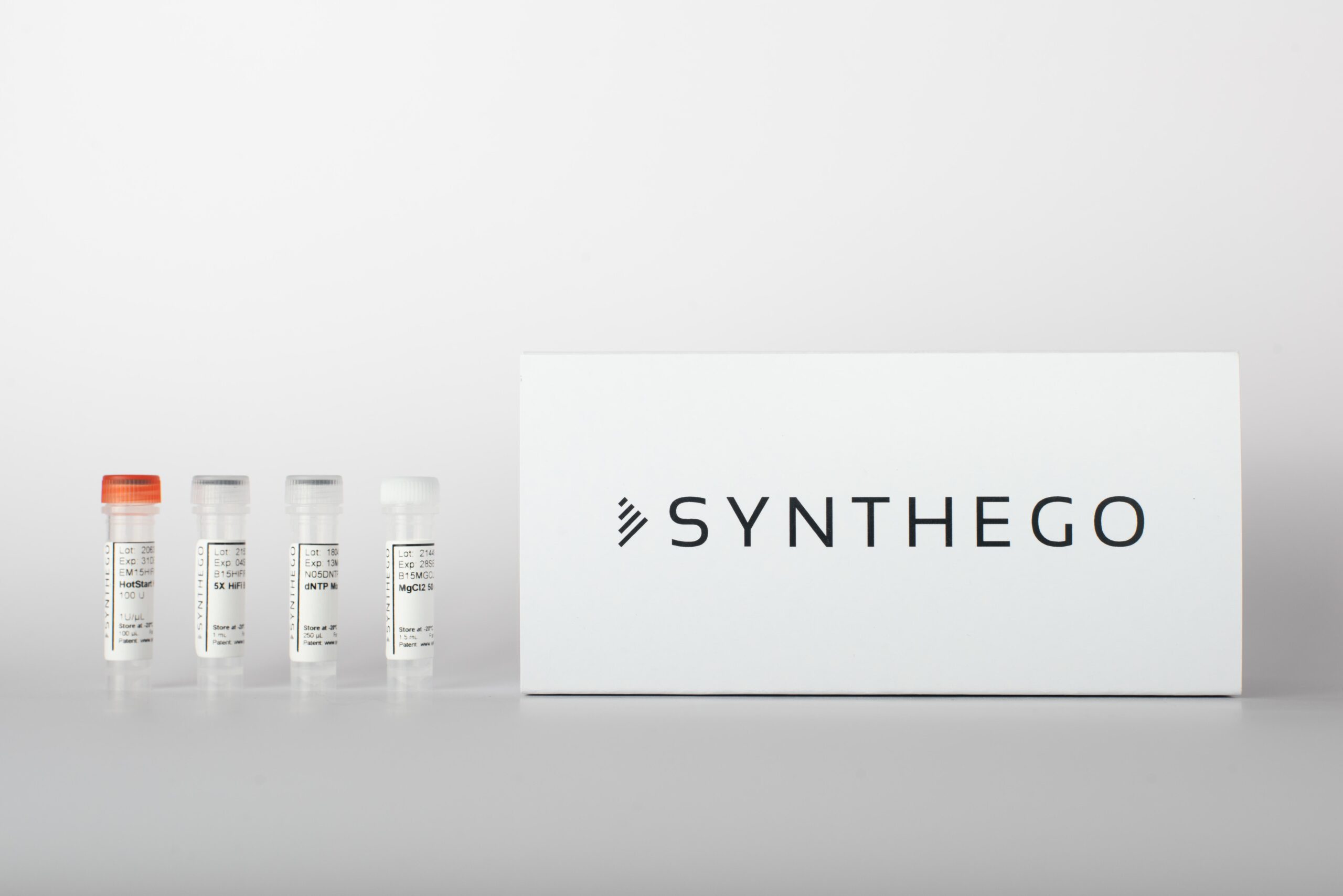
Hot-Start DNA Polymerase, High Fidelity

High-fidelity hot-start enzyme for sensitive applications

Proofreading hot‑start polymerase delivering higher fidelity than Taq with robust amplification of mid‑length targets. Produces blunt‑end products for cloning and is well‑suited for NGS library amplification.

  • 50x higher fidelity than Taq with proofreading
  • Robust amplification of up to 5–10 kb targets
  • Produces blunt ends ideal for blunt cloning
  • Reliable for NGS library amplification

Select a Size

Hot-Start DNA Polymerase, High Fidelity (100 U)

#EM15HIFIPOL-Sm

Product Specifications

Product Number EM15HIFIPOL
Function Proofreading Polymerase; Blunt-End Products
For Use In Cloning, NGS library amplification
Concentration 1 U/µL
Molecular Weight 94 kDa
Source Recombinant E. coli
Shipping Conditions Cold Pack
Storage Temperature -20 C
Stability ≥12 months
Intended Use This product is for research use only
Description

High-Fidelity Hot-Start Enzyme for Sensitive Applications

Hot-Start High-Fidelity DNA Polymerase is a recombinant, thermostable proofreading DNA polymerase engineered for exceptional accuracy and reliability. The enzyme features a ‘hot-start’ mechanism, where antibodies block polymerase activity at ambient temperatures and dissociate after the initial denaturation step at 94°C. This 'hot start' enhances sensitivity, specificity, and yield, while enabling reaction assembly at room temperature. With fidelity ~50 times higher than standard Taq polymerase, Hot-Start High-Fidelity Polymerase ensures precise DNA amplification.

Our Hot-Start High-Fidelity DNA Polymerase efficiently amplifies targets up to 5–10 kb in size, even from high-complexity templates. It demonstrates high resistance to PCR inhibitors, ensuring robust performance across a variety of challenging sample types. Our enzyme features 3'→5' exonuclease (proofreading) activity, which corrects nucleotide incorporation errors during DNA synthesis. Additionally, the enzyme lacks 5'→3' exonuclease activity and reverse transcriptase activity, ensuring the production of blunt-end PCR products suitable for downstream applications like blunt cloning.

Key Features

  • Exceptional Fidelity: Approximately 50 times higher accuracy than Taq polymerase for more precise DNA amplification.
  • Hot-Start Mechanism: Antibodies block polymerase activity at room temperature and dissociate at 94°C, improving sensitivity, specificity, and yield.
  • Blunt-End PCR Products: Ideal for cloning workflows requiring blunt-end products.
  • Amplification of Large Targets: Supports amplification of DNA targets up to 5–10 kb in size.
  • Robust Performance: High resistance to PCR inhibitors ensures reliable results across diverse sample types.
  • Efficient Amplification: Ideal for high-complexity DNA, like GC-rich templates.

Applications

  • High-Fidelity PCR: For applications requiring precise and accurate DNA amplification.
  • Blunt-End Cloning: Produces blunt-end PCR products for seamless cloning workflows.

Technical Notes

  • Optimization Tip: Recommended annealing temperature is 5°C above primer Tm; gradient PCR is suggested for optimization.

Custom Options

We offer flexible customization to meet your specific needs:

  • Volume: Optimize packaging sizes to match your application scale.
  • Concentration: Customize concentrations for optimal performance.
  • Formulation: Available in liquid and lyophilized formats to suit your protocols.
  • Master Mix Creation: Custom manufacturing of PCR master mixes based on your optimized formulations.

Quality

One unit is defined as the amount of enzyme required to catalyze the incorporation of 10 nmol of dNTP into acid-soluble form in 30 minutes at 72°C in the presence of the reaction buffer.

Functional assay
Human genomic DNA was amplified using the DNA Polymerase and specific primers to produce a distinct band of 1100 bp.

Self-priming activity
Standard PCR is carried out without primers, using the DNA Polymerase and human genomic DNA. No products were amplified.

Exonuclease assay
Linearized lambda/HindIII fragments are incubated with the DNA Polymerase in a 50 µl reaction mixture for 4 h at 37°C. No degradation of DNA was observed.

Endonuclease assay
lambda DNA is incubated with the DNA Polymerase in a 50 µl reaction mixture for 4 h at 37°C. No degradation of DNA was observed.

Nick Activity
Supercoiled plasmid DNA is incubated with the DNA Polymerase in a 50 µl reaction mixture for 4 h at 37°C. No conversion of covalently closed circular DNA to nicked DNA was detected.

Contamination with E. coli DNA
A sample of the denatured DNA Polymerase is analyzed with specific primers targeting the 16S rRNA gene in qPCR for the presence of contaminating E. coli DNA. No E. coli was detectable.

Ready to get started?

Get in touch