Cart
Cart
 Account
 Your Orders
 Sign Out
 Sign In

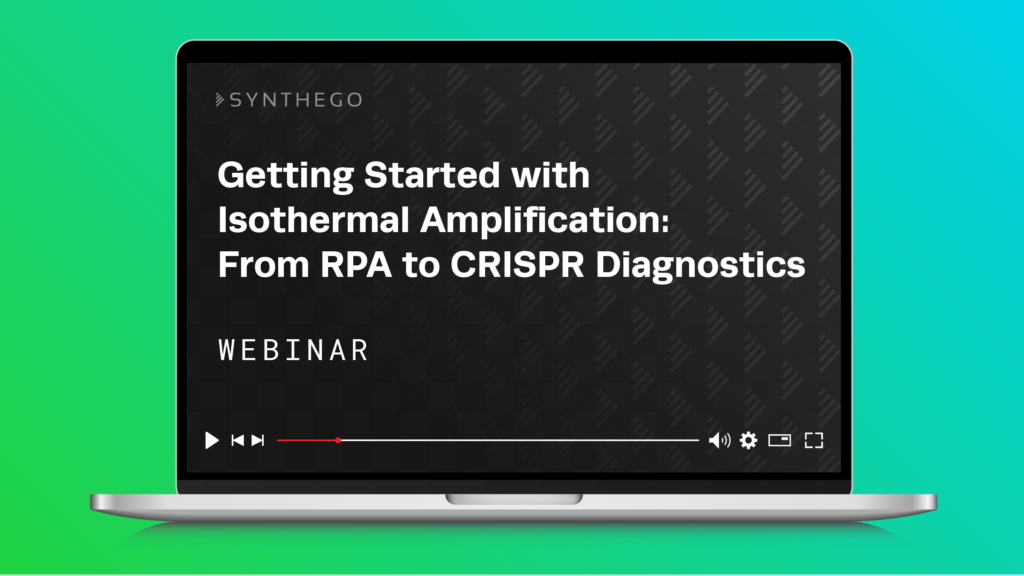
What you’ll learn:
- How Recombinase polymerase amplification (RPA) works and how it compares with PCR and LAMP for different molecular detection applications
- Where RPA can fit in infectious disease, food safety, environmental monitoring, and point-of-care workflows
- Key considerations for designing and optimizing RPA assays based on your target, sample, and intended application
- How to choose between endpoint and real-time RPA detection based on your workflow and detection requirements
- Considerations for DNA vs. RNA targets, sample preparation, and integration with CRISPR-based molecular detection
Recombinase polymerase amplification (RPA) is a rapid, isothermal amplification technology that enables nucleic acid detection at a constant, relatively low temperature without the thermal cycling required for PCR. This makes RPA an attractive option for researchers and assay developers looking to build faster, more accessible molecular detection workflows for applications ranging from infectious disease and food safety to point-of-care and field testing.
About the Presenter

Catherine Smith, PhD, Technical Support Manager, is a molecular biologist with over a decade of experience in biomedical research. At Synthego, Catherine loves working with scientists across diverse fields who are incorporating CRISPR into their groundbreaking research. When she’s not helping scientists with their exciting CRISPR experiments, Catherine can be found applying the scientific method to cooking projects or exploring local live music.