 Cart
Cart
 Account
 Your Orders
 Sign Out
 Sign In
- Enhances RNA Yield: Hydrolyzes pyrophosphate to shift equilibrium toward RNA synthesis.
- Safe and Reliable: Animal-free production for therapeutic applications.
- Optimal Conditions: Requires Mg²⁺ as a cofactor and performs best at pH 7.0.

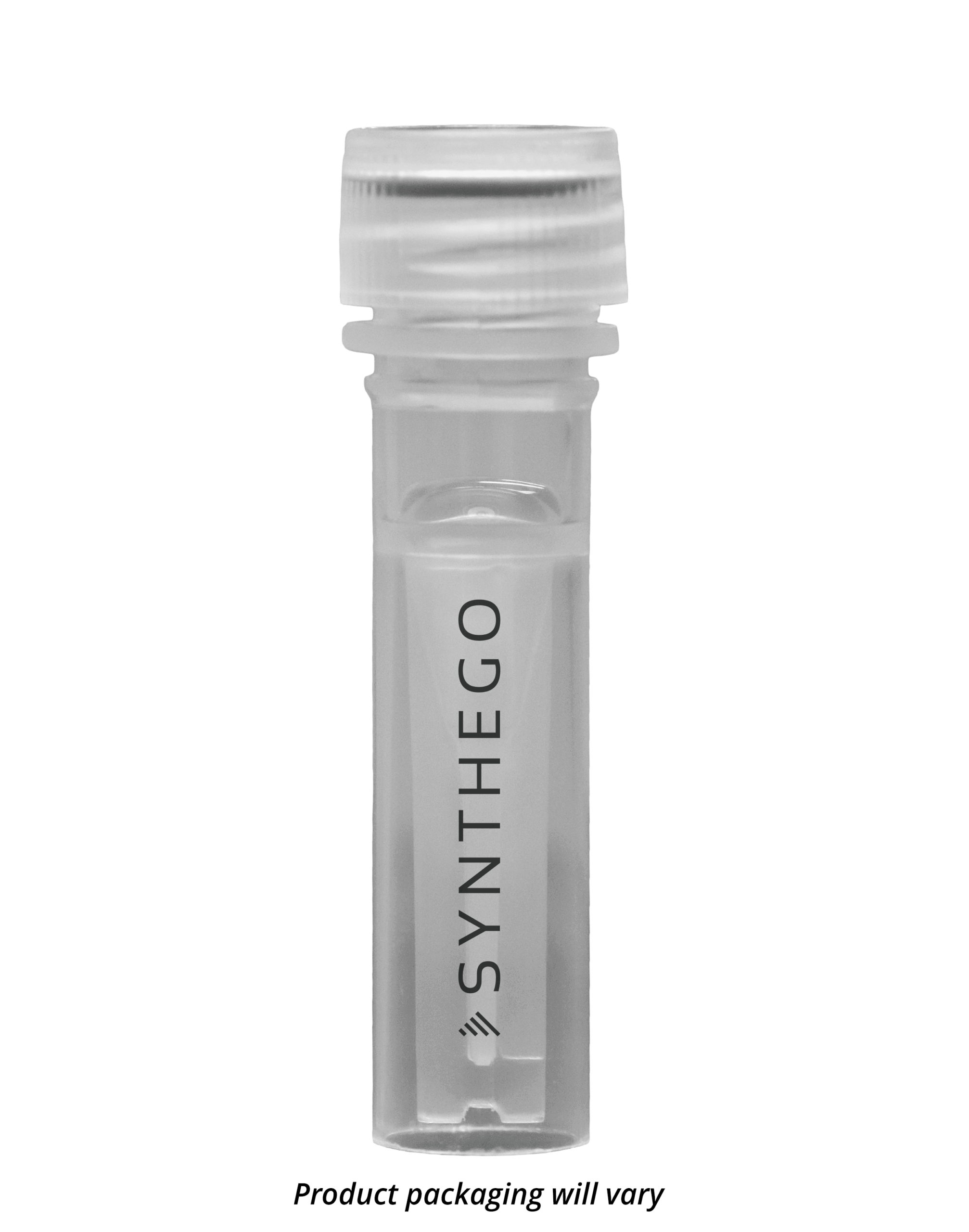
Boost mRNA yield by removing pyrophosphate
In IVT, accumulating pyrophosphate (PPi) inhibits T7 and other RNA polymerases. Inorganic pyrophosphatase hydrolyzes PPi to phosphate, preventing product inhibition and sustaining transcription for higher, cleaner mRNA yields at standard reaction conditions.

| Product Number | R25PYROPHOS |
| Function | Hydrolyzes pyrophosphate to phosphate; Relieves product inhibition |
| For Use In | in vitro transcription (IVT) yield enhancement; RNA synthesis optimization |
| Molecular Weight | 33.4 kD |
| Purity | ≥ 95% |
| Concentration | 0.1 U/µL |
| Delivery Format | Tubes |
| Intended Use | This product is intended for research use only |
| Source | Recombinant E. coli |
| Shipping Conditions | Cold Pack |
| Storage Temperature | -20°C |
Inorganic pyrophosphatase is a high-quality enzyme designed to hydrolyze inorganic pyrophosphate generated during in vitro transcription (IVT) reactions. By removing unwanted pyrophosphate, the enzyme shifts the reaction equilibrium toward RNA synthesis, significantly increasing RNA yield. This makes it an essential tool for mRNA production in both research and therapeutic applications.
We offer flexible customization to meet your specific needs:
One unit is defined as the amount of enzyme that will generate 1 μmol of orthophosphate per minute from inorganic pyrophosphate (PPi) in a 10 minute standard reaction at 25°C containing 20 mM Tris-HCl, pH 8.0, 2 mM MgCl2, and 2 mM PPi.
Purity (SEC-HPLC): ≥95.0%
Endotoxin: ≤10.0 EU/ml
Residual RNase: Negative
Activity (Enzyme Catalytic Efficiency): ≥0.1 U/μl
RNA yield during IVT depends on multiple factors, including template quality, promoter design, enzyme activity, nucleotide concentrations, and reaction conditions. Supporting enzymes such as inorganic pyrophosphatase can help optimize the reaction environment by reducing pyrophosphate accumulation and maintaining efficient RNA synthesis. Learn how to optimize inorganic pyrophosphatase concentration in your IVT reaction in our guide: The Ultimate IVT Optimization and Troubleshooting Checklist.
We recommend starting with 0.1 U per 20 µL reaction volume. Pyrophosphate hydrolysis scales with enzyme concentration, so you can adjust from there based on your results.
Synthego's Inorganic Pyrophosphatase is sourced from Saccharomyces cerevisiae and produced via recombinant expression in E. coli. It has a molecular weight of 33.4 kDa.
Inorganic pyrophosphatase is not required for every IVT reaction but can improve performance in workflows where maximizing RNA yield and transcription efficiency is important. It is particularly useful for high-yield RNA synthesis applications by reducing pyrophosphate accumulation, which can inhibit transcription activity during the reaction.