Cart
Cart
 Account
 Your Orders
 Sign Out
 Sign In

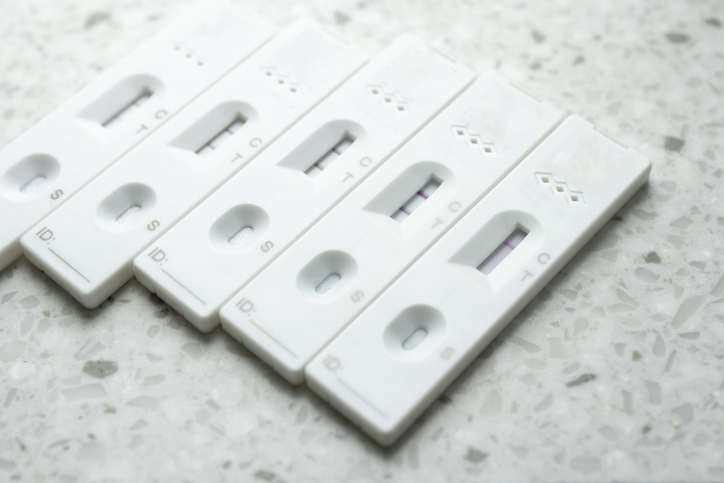
Isothermal amplification enables molecular diagnostics outside the laboratory by eliminating the need for thermal cycling and simplifying instrumentation. Among these approaches, Recombinase Polymerase Amplification (RPA) and Loop-mediated Isothermal Amplification (LAMP) are often compared, but their mechanistic differences create important trade-offs in assay design and deployment.
RPA stands out when speed, low energy demand, and streamlined design matter most. Operating at near-physiological temperatures (37–42°C) and requiring only two primers per target, RPA can deliver amplification in as little as 10–20 minutes without complex thermal control or multi-primer optimization. It also maintains strong performance in crude samples and supports multiplexing—combining simplicity and robustness in a format well suited for point-of-care and portable molecular diagnostics.
RPA Kits Built for Simplicity and Speed
Looking to streamline your isothermal workflow with our customizable kits? See how our high-performance kits can help you move from concept to results faster.

What Is Recombinase Polymerase Amplification (RPA)?
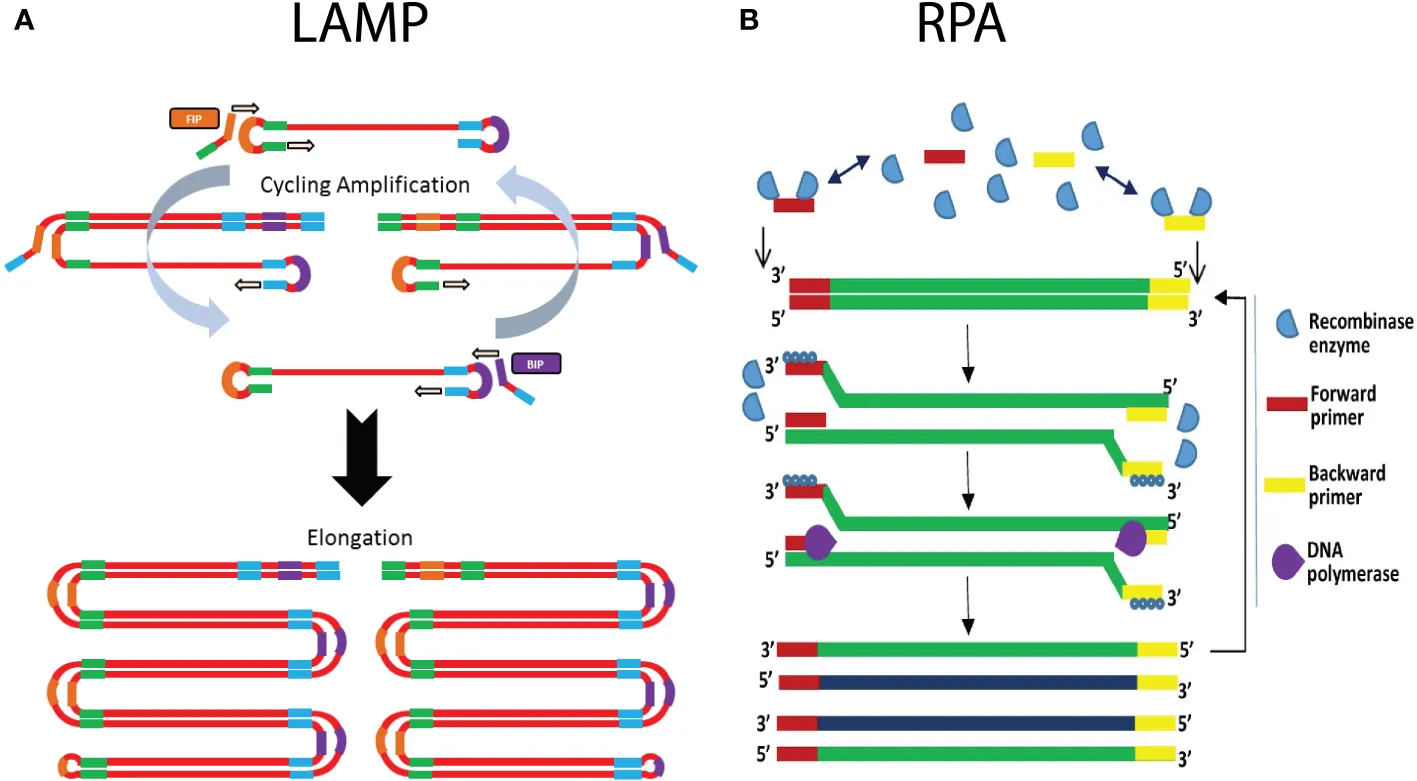
Recombinase Polymerase Amplification (RPA) is a rapid isothermal nucleic acid amplification method that operates at a constant 37–42°C, eliminating the need for thermocyclers. Unlike PCR, which uses heat to denature DNA, RPA relies on enzymes to access the template.
A recombinase (commonly derived from bacteriophages) binds to primers to form a nucleoprotein filament that scans double-stranded DNA for homologous sequences. Upon finding a match, the primer invades the duplex without thermal denaturation. Single-stranded DNA-binding proteins stabilize the displaced strand, and a strand-displacing polymerase extends the primer.
Because the reaction runs continuously at near-physiological temperatures, amplification is rapid and exponential. Dive deeper into mechanisms, methods, and protocols in our RPA and RT-RPA Guide.
Why It Matters for Diagnostics
For diagnostic developers, the recombinase-driven mechanism offers distinct operational advantages that can simplify your workflow:
- Simplified Instrumentation: No thermal cycling hardware is required, reducing device complexity.
- Low Energy Demand: Operation at 37–42°C minimizes power requirements for portable or battery-operated systems.
- Rapid Kinetics: Assays typically deliver results in 10–20 minutes, enabling faster decision-making.
RPA’s ability to operate at lower temperatures makes it a superior candidate for portable, handheld diagnostic platforms where power and space are limited. In some applications, the reaction can even be performed without instrumentation—simply by holding the sample in the palm of your hand.
Use our RPA assay checklist to optimize your workflow
We help you avoid common pitfalls with a step-by-step guide
What Is Loop-Mediated Isothermal Amplification (LAMP)?
Loop-mediated Isothermal Amplification (LAMP) amplifies DNA at a constant, elevated temperature, typically between 60–65°C. It relies on a strand-displacing polymerase and a distinct, multi-primer architecture to drive amplification.
Unlike RPA, LAMP does not use a recombinase enzyme. Instead, it employs a DNA polymerase with high strand displacement activity (often Bst DNA polymerase). The reaction relies on a set of four to six primers that recognize six to eight distinct regions on the target DNA.
The inner primers initiate synthesis and create stem-loop structures. These loops facilitate self-priming, accelerating the reaction as it progresses. The result is the formation of complex concatemer structures and an immense accumulation of DNA product.
Why It Matters for Diagnostics
LAMP is renowned for its robustness and yield:
- High Signal Strength: The massive amount of DNA produced allows for visual detection methods, such as turbidity or colorimetric changes.
- Endpoint Readouts: Visual readouts can simplify workflows in low-resource settings.
However, the methodology introduces added design complexity. Because LAMP requires four to six primers per target, multiplex assay development demands careful optimization to minimize primer–primer interactions and nonspecific amplification. While multiplexed LAMP assays have been successfully demonstrated, expanding target panels generally increases the design and validation burden compared to two-primer systems such as RPA or PCR. Additionally, maintaining a constant 65°C requires greater thermal control and energy input than the lower temperatures used for RPA.
RPA vs. LAMP: Side-by-Side Comparison
|
Feature
|
LAMP
|
RPA
|
|
Temperature
|
60–65°C
|
37–42°C
|
|
Time to Result
|
30–60 minutes
|
10–20 minutes
|
|
Thermal Cycling
|
Not required
|
Not required
|
|
Primer Design
|
Complex
|
Simple
|
|
Primers per Target
|
4–6
|
2
|
|
Multiplexing
|
Yes
|
Yes
|
|
Detection Method
|
Endpoint & Real-Time
|
Endpoint & Real-Time
|
Strategic Advantages of RPA
As diagnostics move closer to the patient, performance requirements shift. If you are developing decentralized testing platforms, speed becomes paramount and hardware must remain minimalistic. In this context, RPA often outperforms LAMP for true point-of-care applications.
Performance without Molecular Complexity
RPA delivers multiplexing capabilities and robust performance with difficult samples comparable to LAMP, but it does so without requiring you to manage complex multi-primer sets or sustained high-temperature operation. By operating at near-ambient temperatures with a simplified dual-primer design, RPA provides a faster and more versatile diagnostic platform for both sophisticated clinical panels and rugged field applications.
Faster Results for Real-Time Decisions
In outbreak scenarios or environmental monitoring, waiting an hour for results is often impractical. RPA’s enzyme-driven kinetics allow for actionable results in as little as 10–20 minutes. This speed supports real-time decision-making, whether screening for pathogens or confirming contamination.
Simplified Hardware Design
RPA operates at 37–42°C—essentially body temperature—reducing the engineering complexity of the diagnostic device. Unlike LAMP, which requires sustained heating at 65°C, RPA platforms can be smaller, lighter, and more energy-efficient. This lower thermal burden simplifies field logistics and extends battery life for portable units.
Synthego Supports You At Every Step
Customized for Your Workflow
Every diagnostic platform has unique requirements, from detection chemistry to sample preparation and device architecture. Synthego offers customizable RPA reagents designed to integrate seamlessly into your workflow. Kit configurations can be tailored—including reagent volume, concentration, and formulation—to match your application, with options available in both liquid and lyophilized formats. This flexibility helps optimize assay performance while simplifying development and scale-up.
Lyophilization: Superior Stability for Point-of-Care Diagnostics
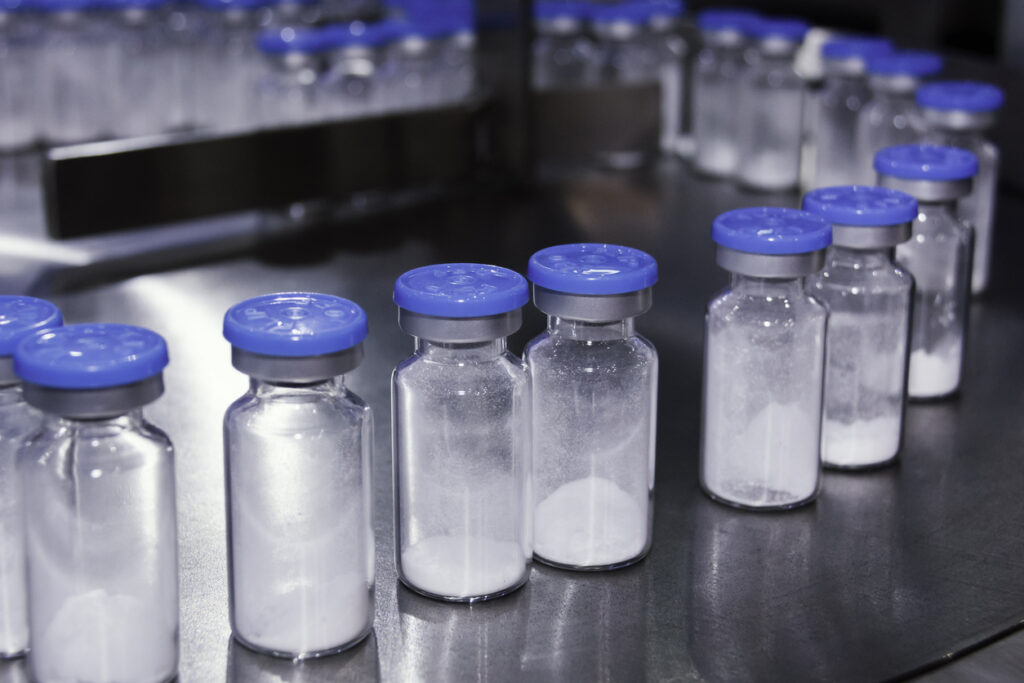
For decentralized and field-based testing, reagent stability is critical. Our RPA kits are available in lyophilized formats that enhance shelf life and simplify storage and transport. This stability enables reliable performance in environments where cold-chain logistics are challenging, supporting true point-of-care and field-deployable diagnostics. Read more about the importance of lyophilization in point-of-care diagnostics.
Flexible Options for DNA and RNA Detection
Diagnostic developers often need flexibility across assay types. Synthego offers four RPA kit formats to suit diverse workflows: RPA kits for DNA targets and RT-RPA kits for RNA detection, each available in both endpoint and real-time detection formats:
- RPA for DNA – Endpoint Detection
- RPA for DNA – Real-Time Detection
- RT-RPA for RNA – Endpoint Detection
- RT-RPA for RNA – Real-Time Detection
This structure allows you to select the best combination for your assay, whether detecting pathogens, monitoring biomarkers, or integrating with specialized instrumentation.
Customize Your Kit
Tailor your isothermal amplification workflows with customizable RPA kits designed to meet your specific diagnostic or research needs. From optimized reaction conditions to lyophilization, our flexible solutions ensure precision and reliability for any application.

Real-World Applications
Both technologies have found their niches in molecular diagnostics. LAMP is widely used in agricultural settings and simple screening tests where high-throughput visual readouts are valuable, such as lyophilized colorimetric RT-LAMP test kits for SARS-CoV-2.
However, RPA is increasingly favored for sophisticated, decentralized testing platforms. Its compatibility with lateral flow strips, fluorescence detection, and microfluidic integration makes it the engine behind next-generation field surveillance systems and rapid infectious disease platforms.
Furthermore, the integration of RPA with CRISPR/Cas creates a powerful synergy where the rapid isothermal amplification of RPA is coupled with the precise, RNA-guided target recognition of the Cas protein, enabling highly sensitive and specific visual detection without the need for complex laboratory hardware.
The Future of Isothermal Amplification
- Point-of-care diagnostic tests
- Lab-based, rapid infectious disease platforms
- Field-based surveillance systems
- Low-resource molecular testing
Explore the Full Molecular Diagnostics Portfolio
Explore Synthego’s full molecular portfolio — from PCR & RT enzymes and IVT enzymes to isothermal amplification and sample preparation & processing — to empower your next molecular or clinical diagnostic breakthrough.