Cart
Cart
 Account
 Your Orders
 Sign Out
 Sign In

Editor's Note (2026): This article was originally published during the early COVID-19 pandemic to highlight Omar Abudayyeh and Jonathan Gootenberg’s work on STOPCovid and the first FDA Emergency Use Authorization for CRISPR diagnostics. While the breakthrough and historical overview remain accurate, the molecular diagnostics landscape has evolved significantly. For the latest advances in CRISPR-based detection, isothermal amplification, and point-of-care testing workflows, explore our related diagnostic resources below:
- The Rise of CRISPR Diagnostics
Learn how CRISPR-based detection works, where it is being applied, and how this technology continues to shape the future of molecular testing. - How to Build an RPA-CRISPR Assay for Rapid Diagnostics
Discover how isothermal amplification methods like RPA can be integrated with CRISPR detection workflows to enable rapid nucleic acid testing. - Molecular Diagnostics in Infectious Disease: From PCR to Rapid Isothermal Methods
Explore how PCR, RPA, and emerging molecular technologies are being used to address challenges in infectious disease detection. - RPA vs. LAMP: Choosing the Right Isothermal Amplification Method
Compare two leading isothermal amplification approaches and understand how they fit different molecular diagnostic applications.
In our recent CRISPR Office Hours, we were joined once again by Omar Abudayyeh and Jonathan Gootenberg, who are both McGovern Fellows and run a lab together at MIT. They are also the co-founders of Sherlock Biosciences. In this week’s session, they shared some exciting news about their diagnostic test recently being granted Emergency Use Authorization by the FDA. That’s not all! They also developed a next-generation diagnostic test, STOPCovid, and you can learn all about it here!
Watch the webinar here, or jump down and read the summary—the choice is yours!
Introduction
The coronavirus pandemic has created a need for a diagnostic test that isn’t just accurate but also able to deliver rapid results. In order to contain the transmission of the virus, the need of the hour is to develop easy to use tests for quick virus detection. This is an exciting time for CRISPR diagnostics, as there is a need for rapid deployment of tests. Several labs have already developed CRISPR based diagnostic test protocols for SARS CoV-2 detection.
Omar Abudayyeh and Jonathan Gootenberg’s lab has been one of the first few ones to develop a protocol for COVID-19 detection. In April, they spoke about how they adapted SHERLOCK technology to use it for SARS-CoV-2 detection in our CRISPR Office hours. Now, less than a month later, they are back again with more exciting news. They have received FDA emergency use authorization for their CRISPR SARS-CoV-2 Rapid Diagnostic and are already out with a faster and simpler version known as STOPCovid. In this article, you can learn all about how this technology works!
Evolution of SHERLOCK to STOPCovid
The SHERLOCK protocol for COVID that was released in February involves a couple of incubation steps, multiple fluid handling steps, and specialized laboratory equipment. This made it difficult for the protocol to be used by an untrained person and limited its use to complex labs. The inspiration for STOPCovid was to develop an easy-to-use diagnostic test that required only a single chemical reaction. The goal was to make the entire process simple so that a patient sample could be taken and directly put in the reaction without the need for sample purification.
This idea led to the collaboration between their lab and Feng Zhang’s lab to develop STOPCovid which uses a new CRISPR enzyme that’s stable at higher temperatures. In the next section you can learn more about this new test and the steps involved.
STOPCovid: What Is It And How Does It Work?
STOPCovid is a simple portable testing device that uses the STOP chemistry (based on the SHERLOCK technology) to quickly detect the presence of COVID-19 RNA by lateral flow. It involves the following steps:
Step 1: A saliva or nasal swab is taken from the patient and added to the lysis buffer.
Step 2: After letting the sample sit in the buffer solution for a few minutes, it is then transferred to SHERLOCK using a pipette.
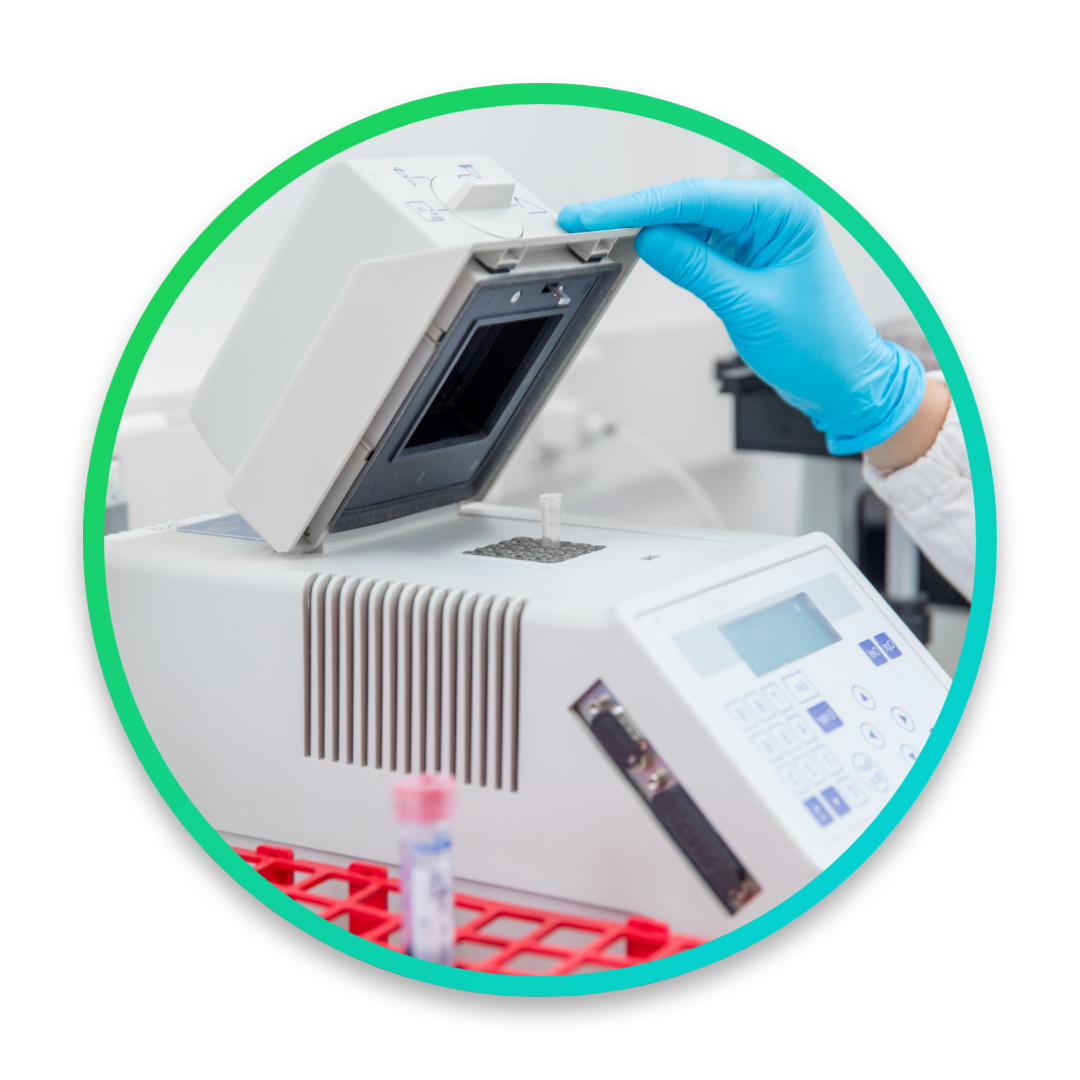
Step 3: Heat SHERLOCK for 60 mins at 60°C
Step 4: Dip detection strip in SHERLOCK
Step 5: Inspect the detection strip for results
This test is simple enough to be run in any setting by anyone without special training. They are now looking into developing a simple and cheap home testing device that can give out a fluorescence readout within 20-30 mins.
Looking to build your own rapid diagnostic assay?
While STOPCovid uses LAMP for isothermal amplification, Recombinase Polymerase Amplification (RPA) operates at lower, single temperature (37-42°C) and delivers results in under 20 minutes—making it ideal for CRISPR-Cas12/Cas13 workflows.
RNA Amplification And CRISPR Detection Process
Once the sample is added to the buffer, it breaks open the SARS-CoV-2 viral particles, exposing its RNA (nucleic acid) for detection. Prior to detection it is important that the small amounts of viral RNA found in the sample are amplified. The amplification is done using a method called Loop-mediated Isothermal Amplification (LAMP). Unlike methods, LAMP does not require bulky instrumentation or rapid fluctuations in temperature.
The detection of viral RNA is possible by a CRISPR enzyme, Cas12b, which is slightly different from Cas12a. The Cas12b nuclease is a protein from the bacteria Alicyclobacillus acidiphilus (AapCas12b). One of the primary reasons they chose this enzyme was because it maintained activity in the same temperature range as LAMP. Upon recognition, Cas12b cleaves a reporter molecule, breaking a bond between a FAM molecule and a biotin molecule.
Fun fact: The Cas12b enzyme used in STOPCovid is from a bacteria that are found in acidic juices such as orange juice!
Next Steps And Future Vision For STOPCovid Technology
The next steps for STOPCovid are to continue testing the technology on clinical samples and to begin the process to seek FDA approval. Omar and Jonathan’s vision for this test is to make it easy to use in point of care settings. They are hoping to develop a device through which the STOPCovid test can be run and the results scanned via a mobile phone app.